The Dakota War of 1862 Part One: When Patience Ran Out
In the summer of 1862, a Dakota leader named Little Crow warned his people that war with the United States would destroy them. Then he led them into it anyway, because he would not let them face it without him. Six weeks later, the largest mass execution in American history proved him right. The Minnesota I live in today was built on the ground his people were driven from, and most of us were never taught how.
This is the first of a three-part series drawn from a college paper I spent many months on, about Henry David Thoreau and the Dakota people, which you can now read as a blog post. There is considerable factual overlap, but my intention with the series is less interpretive. I wrote it well after the original paper, from my scattered notes and references.
In June of 1861, a steamboat named the Frank Steele pulled up to the Redwood Agency along the Minnesota River carrying Minnesota's governor, territorial dignitaries, and a collection of curious observers. The boat had been named after a local settler whose "flashing axe in the wilderness" symbolized settler progress, and it repeatedly rammed riverbanks to navigate the winding waters. Among the passengers was Henry David Thoreau, the dying New England naturalist (see more about that connection in my post Walden and Bdote), making a journey west in a vain attempt to cure his tuberculosis. He watched as Dakota families gathered for what would become their final peaceful annuity payment from the US Congress. In a letter home, he noted simply, "The most prominent chief was named Little Crow. They were quite dissatisfied with the white man's treatment of them & probably have reason to be so."
One year later, that dissatisfaction erupted into a war that ended in a mass hanging and the near-total removal of the Dakota people from Minnesota. The roots of the war ran back more than a decade, chiefly to two treaties signed in 1851 at Traverse des Sioux and Mendota, which fundamentally altered Dakota life. On paper, these agreements ceded nearly all Dakota land in exchange for reservation strips along the Minnesota River and sizable annual payments. But the Dakota who made their marks on those documents didn't understand what they were agreeing to.
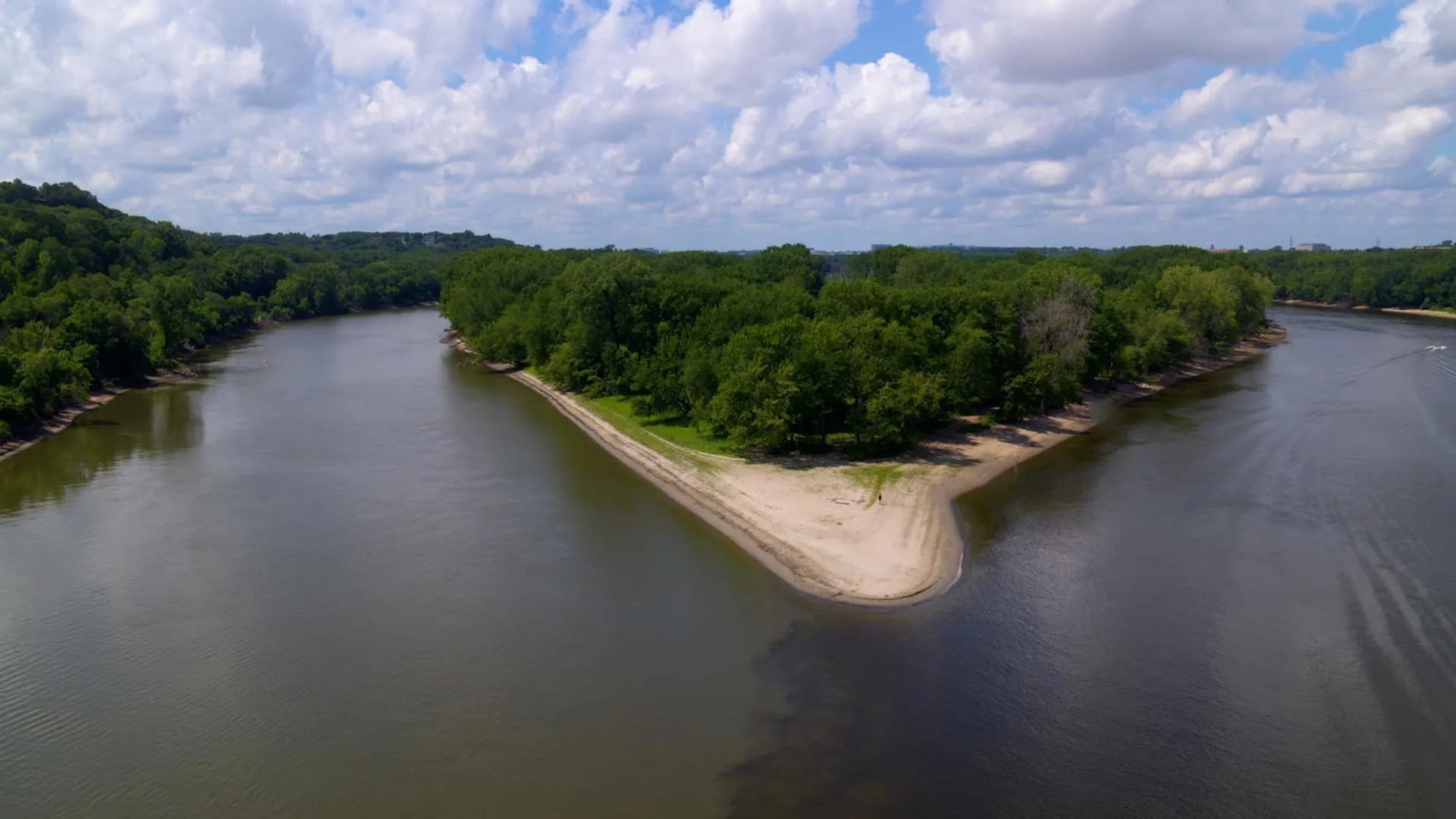
For a people who understood land as Ina Maka (Mother Earth), a living relative you could no more sell than your own mother, the very concept of exclusive title had no form a translation could reach. Missionary Stephen Riggs, tasked with translating the treaty into Dakota, chose his words with deliberate ambiguity. The English version stated that the Dakota "agree to cede, and do hereby cede, sell and relinquish to the United States, all their lands in the state of Iowa; and, also all their lands in the territory of Minnesota." Each of those terms carried the permanent and exclusive transfer of title in American property law. Riggs translated "cede" as erpeyapi, a Dakota word meaning "to give up, throw away, lose."
Now, the Dakota knew how to make agreements about land use. At Fort Snelling, they had agreed Americans could build and settle there without facing Dakota opposition, while the Dakota retained free passage and continued use for hunting and ceremony. That kind of arrangement they understood, and erpeyapi fit it. The word could describe an agreement to let these people remain, to step aside from the right to force them out. What it could not carry was the exclusion that American title required. Once they signed, American law would recognize no Dakota claim to those lands. Any access they retained would depend entirely on settler tolerance. Riggs used the same word in the treaty for money set aside for farming equipment, a practical allocation for a stated purpose. A Dakota reader would have understood the land provisions the same way. "Sell" and "relinquish" received similar treatment, rendered in everyday Dakota phrasing with none of the legal finality of the English text. American negotiators, meanwhile, insisted everything had been properly explained.
The result was predictable. The Dakota thought they were sharing use of the land, perhaps temporarily. The United States believed it had purchased exclusive ownership forever. The gap between those understandings was quite deliberately in favor of the side that had more guns.
But the translation was only half the swindle. At Traverse des Sioux, as each chief stepped up to make his mark on the treaty, he was also steered a few feet over to a second table where the trader Joseph Brown waited with another pen and a separate paper. That document, never read aloud to the assembled bands, set aside a special fund of so-called hand money, either $305,000 or $400,000 (sources disagree), worth between $13 and $17 million in 2026 dollars, almost all of which went straight to the traders to settle Dakota debts, some of them going back decades. When the Indian subagent Nathaniel McLean asked that the paper be read in open council, he was waved off. The Dakota later said they had been tricked out of money that should have reached them in cash.
Confined to narrow strips of land unsuitable for their traditional hunting and gathering, the Dakota became dependent on those promised annuity payments. The treaties never handed the land money over directly, instead the government held the principal in trust and paid out only the interest, a fixed yearly annuity owed across 50 years, the cash portion running around $71,000 (about $3.1 million in 2026) in gold each summer on top of an issue of goods and provisions. The bands timed their year around its arrival, and a single late payment could leave thousands with nothing. But the money rarely arrived as promised, and when it did, traders were there first with their account books. Big Eagle, a Dakota leader, later explained, "The Indians bought goods of them on credit, and when the government payments came the traders were on hand with their books, which showed that the Indians owed so much and so much, and as the Indians kept no books, they could not deny their accounts, but had to pay them, and sometimes the traders got all their money."
The pressure to assimilate also intensified. Government agents and missionaries pushed farming over hunting, and Christianity over traditional spirituality. Individual land allotments replaced communal land holding. The Dakota community fractured. Some tried to adapt by cutting their hair and taking up plows. Others held to traditional ways. Big Eagle called them the "white man's party" and the "Indian party," respectively. Neither choice brought security.
By the summer of 1862, patience had worn to nothing. A failed harvest in 1861, followed by an unusually brutal winter, left Dakota families starving. Sarah Wakefield, a white woman living at the Upper Sioux Agency, later wrote about what she saw, "These poor creatures subsisted on a tall grass which they find in the marshes, chewing the roots, and eating the wild turnip... I know that many died from starvation or disease... It made my heart ache."
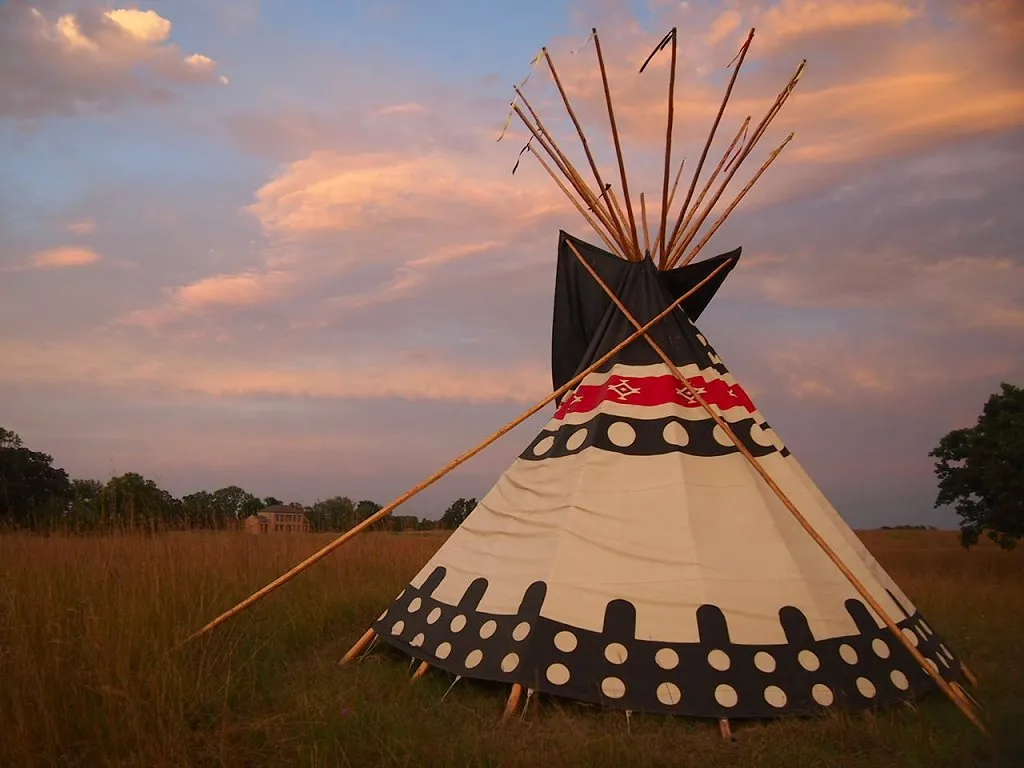
The promised annuity payment was late that year again. For many families' survival at risk. Weeks passed by as the families camped near the Agency, waiting. Rumors spread that it might not come at all. Still, traders at the agencies refused to extend credit. When Dakota leaders pleaded for food, trader Andrew Myrick reportedly replied, "If they are hungry, let them eat grass." They already were.
Open conflict had nearly broken out already. On August 4, with the annuities still unpaid, several hundred starving Dakota surrounded the government warehouse at the Upper Agency and began carrying off sacks of flour. Soldiers formed a line, a howitzer was wheeled around to point at the storehouse door, and the standoff somehow held without a shot fired. Through all of it, the agent responsible, Thomas Galbraith, stayed barricaded in his office, "getting drunk and rattled" by one soldier's account, while another witness called him "crazy as a loon."
A second near-miss came the very next day, this time at Fort Ridgely, the undermanned army post downriver from the agencies. On August 5, 96 warriors came to the fort and asked to hold what they called a "green corn dance" on the parade ground itself, inside the post, where only 30 soldiers stood guard. The post commander agreed, but sergeant John Jones did not trust it and refused to let armed Dakota in among the buildings, sending them to dance out by the horse pond instead. They left their guns, tomahawks, and ammunition in the brush, and when they shed their blankets, every one of them was in the red and yellow war paint of the Sioux. They danced about an hour and camped a quarter mile off. Jones was uneasy enough to keep his howitzers trained on the camp all night, and by dawn the Dakota were gone.
What the dance had been for came out only after the war. A Frenchman who had sat in on a Dakota council on August 3 came quietly to Jones, begging him never to repeat his name. "They will kill me, sir," he said. "They will kill my wife and children." The warriors had meant to take the fort, he explained, and when Jones asked why they never tried, the Frenchman said it was the artillery. "They saw, during their dance, and their stay at the fort, that big gun constantly pointed at them."
Good Fifth Son would later describe what he called "a starving condition and desperate state of mind." In councils and around fires, debate turned bitter. A decade of patient negotiation and attempted adaptation had brought only humiliation and hunger. Every treaty the United States had signed, it had broken. Now, with soldiers away fighting amongst themselves in the southern states, some saw an opportunity to reclaim what had been stolen.
The annuity payment that might have prevented everything, $71,000, arrived at Saint Paul the day before the fuse was lit. This year it had been delayed by debate in the Congress as to whether it should be in gold, as agreed in the treaty, or in paper notes, which would be easier and cheaper to produce during the ongoing Civil War. The 220 pounds of gold coins finally reached Fort Ridgely the next morning, at noon on August 18, six hours after the attacks had already begun.
The Breaking Point
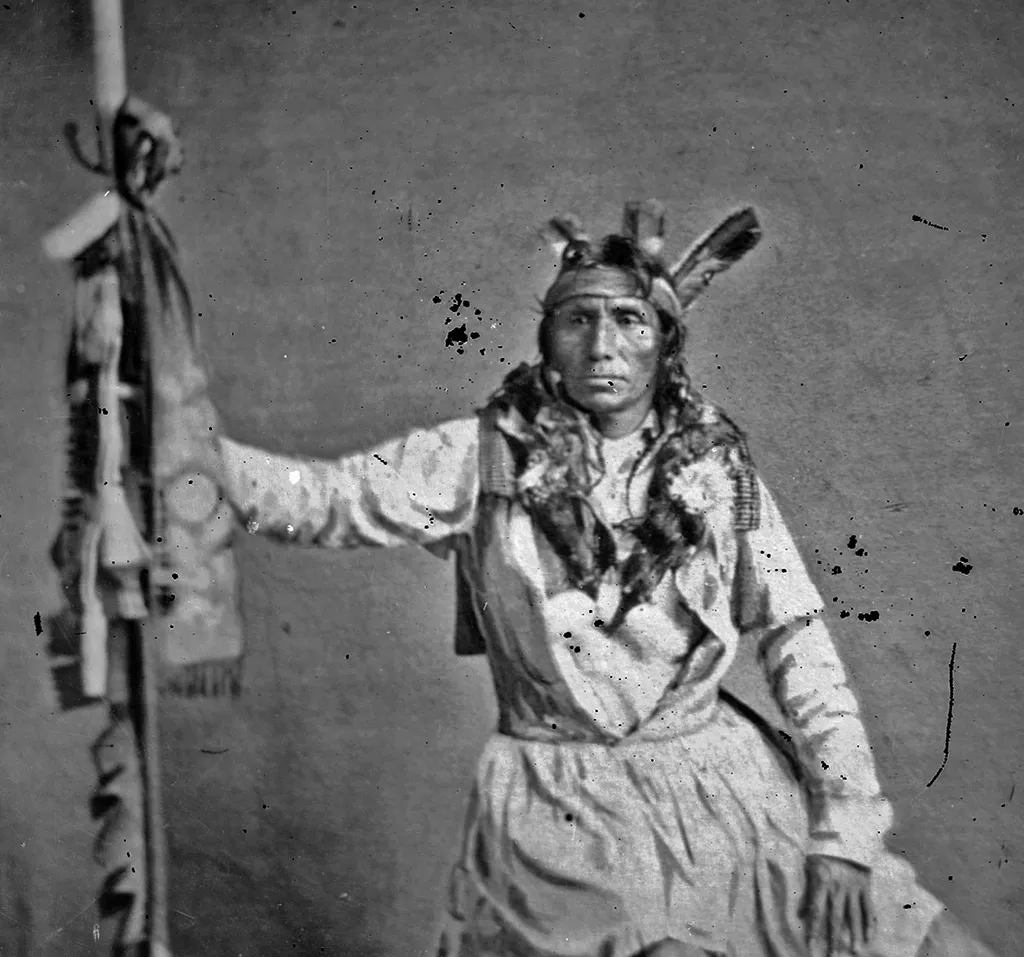
On Sunday, August 17, 1862, Little Crow attended services at the Episcopal chapel at the Lower Agency and reportedly shook hands with everybody present. 50 miles to the north, near Acton, four young Dakota men out hunting had gotten into an argument about stealing eggs from a settler's farm. By the time it was over, five white settlers lay dead. The hunters knew what this meant. Individual guilt or innocence wouldn't matter; the whole people would answer for four men. They had watched it happen before. Five years earlier an outlawed chief named Inkpaduta had killed more than 30 settlers at Spirit Lake on the Iowa border and slipped away, and Washington had answered by withholding every band's annuities until the Dakota themselves ran him down. Little Crow had helped lead that hunt and came back empty-handed. The hunters rode through the night from Acton back toward the Agency, and word spread rapidly. By midnight, leaders had gathered at Little Crow's house for an emergency council.
Little Crow was already in a bitter mood. He had lost the election for speaker (an elected role that gave collective voice to all the Lower Sioux bands, separate from his own band leadership) to Traveling Hail that summer, defeated in part because many in his community blamed him for agreeing to sell the northern strip of the reservation in 1858. When the delegation arrived with news of the Acton murders, he pushed them away. "Why do you come to me for advice? Go to the man you elected speaker and let him tell you what to do."
But Little Crow was still seen as a great leader, and so they refused to leave. The debate ran past midnight. Some urged caution, Big Eagle among them. Others saw this as the moment to act, to reclaim stolen land before federal troops could return from the Civil War. Little Crow (Taoyateduta) had spent years advocating accommodation. He had negotiated in Washington and taken up farming, and he had become chief after surviving a violent succession fight that left both his wrists shattered by gunfire. Now he painted his face black and sat with his head lowered. He knew war was futile.
Then a young warrior called him a coward.
Little Crow jumped up and threw the man's headdress to the ground, and began to speak. His son Wowinape stood beside him that night and memorized his words. Years afterward he recounted them several times to a lawyer, Hanford Gordon, who, with the help of missionary Stephen Riggs, translated and published the speech decades later. What comes down to us is that remembered version:
Taoyateduta is not a coward, and he is not a fool! When did he run away from his enemies? When did he leave his braves behind him on the war-path and turn back to his teepees? When he ran away from your enemies, he walked back on your trail with his face to the Ojibways and covered your backs as a she-bear covers her cubs!
Braves, you are like little children; you know not what you are doing... We are only little herds of buffalo left scattered; the great herds that once covered the prairies are no more. See!–the white men are like the locusts when they fly so thick that the whole sky is a snowstorm... Kill one–two–ten, and ten times ten will come to kill you. Count your fingers all day long and white men with guns in their hands will come faster than you can count... Yes; they fight among themselves, but if you strike at them they will all turn on you and devour you and your women and little children just as the locusts in their time fall on the trees and devour all leaves in one day. You are fools. You will die like the rabbits when the hungry wolves hunt them in the Hard Moon.
He made his argument fully. He knew what was coming. He went anyway.
Taoyateduta is not a coward; he will die with you.
By dawn on August 18, the Dakota had resolved to go to war. The fighting that followed would last six weeks.
References
- Anderson, Gary Clayton, and Alan R. Woolworth, eds. Through Dakota Eyes: Narrative Accounts of the Minnesota Indian War of 1862. St. Paul: Minnesota Historical Society Press, 1988.
- Carley, Kenneth. The Dakota War of 1862. 2nd ed. St. Paul: Minnesota Historical Society Press, 2001.
- Flanagan, John T. "Thoreau in Minnesota." Minnesota History 16, no. 1 (1935): 35–46.
- Harding, Walter. "Thoreau and Mann on the Minnesota River, June, 1861." Minnesota History 37, no. 6 (1961): 225–28.
- Michno, Gregory. Dakota Dawn: The Decisive First Week of the Sioux Uprising, August 1862. El Dorado Hills, CA: Savas Beatie, 2011.
- Minnesota Historical Society. "U.S.-Dakota War of 1862: Timeline." https://www.mnhs.org/usdakotawar/timeline.
- Wakefield, Sarah F. Six Weeks in the Sioux Tepees: A Narrative of Indian Captivity. Norman: University of Oklahoma Press, 1997.
- Waziyatawin. "Maka Cokaya Kin (The Center of the Earth): From the Clay We Rise." Paper presented at the University of Hawaii Manoa International Symposium, 2008.
- Westerman, Gwen, and Bruce M. White. Mni Sota Makoce: The Land of the Dakota. St. Paul: Minnesota Historical Society Press, 2012.
- Wingerd, Mary Lethert. North Country: The Making of Minnesota. Minneapolis: University of Minnesota Press, 2010.